
A statewide production figure is a useful thing and a cold one. It tells you Oklahoma made roughly 48.9 million bushels of wheat in 2026 against 101.1 million the year before. It does not tell you what that does to a section of ground that has been in the same family since before statehood.
Start with the yield. A statewide average of about 23.93 bushels an acre is not what anybody actually harvested. It is the midpoint of a spread that runs from the mid-30s to the mid-50s north of Highway 51 down to 15 to 25 across much of southern and central Oklahoma, and worse than that in the west. Two operations forty miles apart had completely different years.
Now the costs, which did not average anything. Fuel, fertilizer, seed, and equipment payments are set before anyone knows what the crop will do. They are the same on a 20-bushel field as on a 50-bushel one. That is the entire problem with a drought year in one sentence: the expense side is fixed and the revenue side is not.
The protein result is the one genuinely good card. Stress pushed the statewide average to 12 to 13 percent, and protein is paid for. An operation that gets a premium on the bushels it did make claws back some of the gap. Nobody is calling it a good year, but it is the difference between a bad year and a year that ends the operation.
The decisions this fall are the ones that matter more than this harvest did. Whether to plant wheat again, whether to plant it on the same acres, whether to sell breeding stock to cover the note, whether to lease out ground rather than farm it. Those choices get made around a kitchen table in September and October, and they do not reverse easily. A herd sold this year takes a decade to rebuild.
The pattern to watch is not the price board. It is the drought map going into planting. This crop failed on winter and spring moisture that never came, and the same subsoil is what next year's stand has to start on. That is the number that decides whether 2027 is a recovery or a repeat.
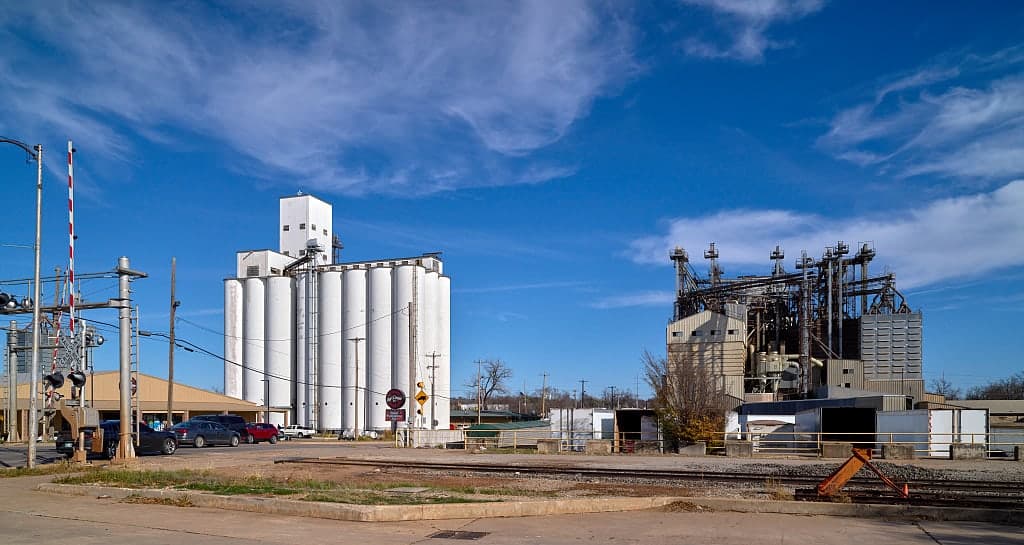
Meanwhile, the infrastructure that serves those farms — the co-op, the elevator, the equipment dealer, the crew that cuts on contract — is running on the same halved volume with none of the fixed costs halved. In a small county, those businesses are the ones that keep the school open.
We will keep publishing the state and extension numbers as they land, and keep them next to the farm-level arithmetic, because the state number alone has never once told a producer what to do.
We will keep publishing the state and extension numbers as they land, and keep them next to the farm-level arithmetic, because the state number alone has never once told a producer what to do.
Sources: High Plains Journal: Oklahoma wheat crop update · Oklahoma Farm Report: crop cut in half by drought