
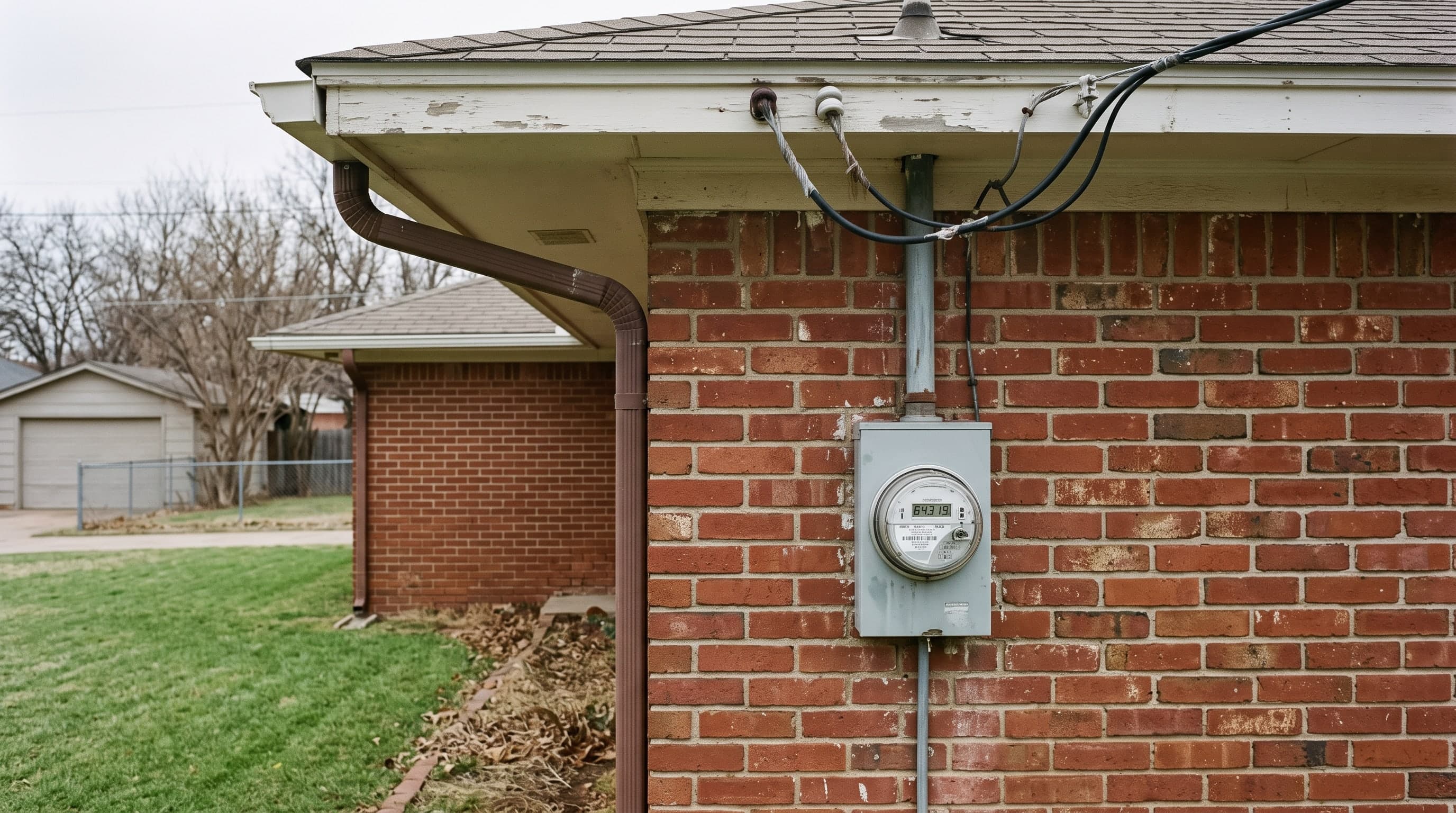
Start with the number ratepayers will actually feel. Public Service Company of Oklahoma came into its rate case asking for a residential increase of roughly 15 percent — more than $25 a month for the average household. On June 30, Attorney General Gentner Drummond announced a settlement cutting that to about 1 percent, roughly $2.45 a month. The deal was negotiated by the AG's utility regulation unit alongside AARP, the Petroleum Alliance and the commission's own public utility staff, and it now waits on approval by the three elected corporation commissioners.
That is the normal arc of a rate case, compressed. A utility files an application saying its costs have outrun its rates; the commission's Public Utility Division audits the books; anyone with a stake — industrial customers, advocacy groups, the attorney general — can intervene; hearings follow; and most cases settle, because a negotiated number beats a litigated one. The commission then votes the settlement up or down. This case shows how much intervention matters: PSO's roughly $600 million ask drew more than 300 entries of appearance, and more than 20 customers spoke against it at a June 1 public comment session.
But the settlement resolves only one of the rooms where your electric bill is being decided. On May 22 the Corporation Commission preapproved $1.3 billion in new PSO generation and storage capacity — power intended for large industrial customers, including data centers in eastern Oklahoma and the proposed $4 billion Emirates Global Aluminum smelter at Inola. Preapproval commits ratepayers before the concrete is poured — which is exactly why it is being appealed.
Rep. Tom Gann, the Inola Republican, took that order to the Oklahoma Supreme Court as case No. 124090. His argument is the one running through every large-load fight this year: existing residential customers should not subsidize infrastructure built for new industrial load, and the smelter and data centers should sit in their own customer class, paying their own way. Commission orders appeal directly to the state Supreme Court; briefs are due this winter.
The appeal is not a one-off. Across multiple utility cases, Gann is challenging $475 million in rate increases, $3.2 billion in ratepayer-backed bonds, $11 billion in fuel charges and the $1.3 billion preapproval — a running audit, from a single legislator, of much of what the commission has approved since late 2024, when it advanced what critics called huge PSO and OG&E increases. Win or lose, the appeals will build a modern body of Supreme Court law on what the commission may preapprove.
What to watch: the commission's vote on the settlement, the briefing schedule in 124090, and how both interact with the pending large-load tariff cases, which try to answer the customer-class argument by design rather than litigation. The pattern of 2026 is consistent: the asks start big, the settlements come in small, and the structural questions keep moving upstairs.
Sources: Oklahoma AG: PSO settlement · Oklahoma House: Gann appeals $1.3B preapproval · NonDoc: 2024 rate increases advanced