
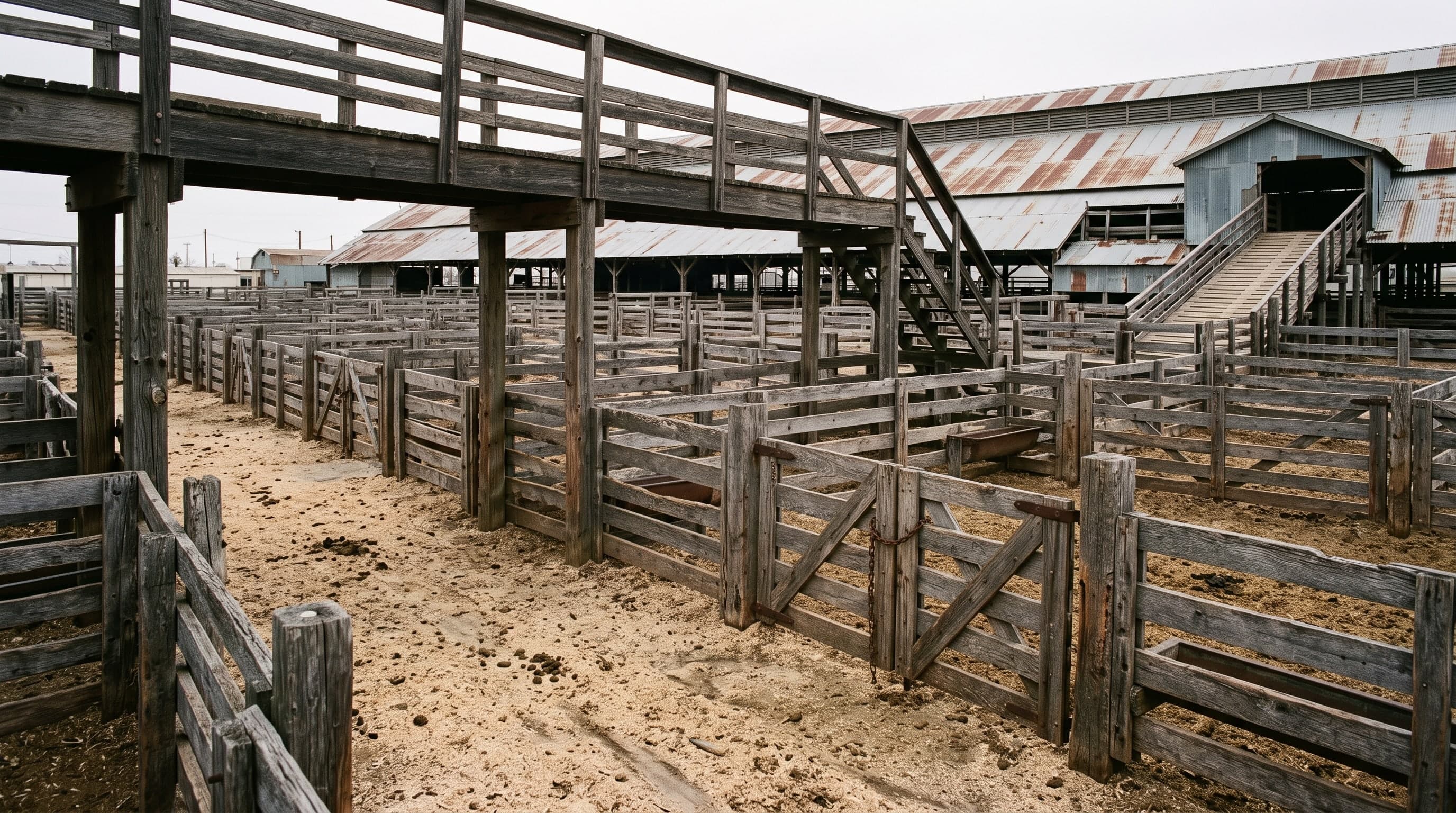
Monday's run at the Oklahoma National Stockyards told the story in one number: about 2,800 head came to town, against 5,525 the same week last year. USDA market reporters said feeder cattle and calves were not well tested in the opening rounds because numbers were simply too limited, with demand moderate to good for what was there. Medium and large No. 1 steers brought $304 to $518 per hundredweight; heifers brought $283 to $497.50.
The thin alleys are not a mystery. Producers spent the drought years of 2022 through 2025 pulling cattle to town early — first because pastures failed, then because prices kept rewarding it — and that borrowing from the future has now come due. The same pattern showed up across the region this week: Western Livestock's market update counted roughly 2,600 head against 5,500 a year ago, with feeder steers steady to $5 higher, quality steers off grass drawing consistent interest, and feedyard buyers acquiring replacements cautiously in triple-digit heat rather than chasing the market.
What is left is bringing record money. The weighted average price for 750-to-800-pound feeder steers at Oklahoma City set consecutive all-time highs this spring, first at $383.69 per hundredweight in April and then $388.06 in early May, and the summer market has held near those levels because the supply math has not changed: fewer cattle exist, and everyone bidding knows it.
The July Cattle report explains how slowly that math will turn. OSU livestock economist Derrell Peel notes the national herd is essentially flat — total inventory up 0.2 percent, but beef cows still down 0.7 percent, meaning the factory is still shrinking even as replacement heifer numbers tick up 2.7 percent. This year's calf crop is projected at 32.5 million head, down 1.5 percent, and Peel expects feeder supplies to keep declining through 2027. A heifer held back this year does not put a calf in the beef supply until the end of the decade.
Two wildcards hang over the fall. The Mexican border, closed to cattle imports over the New World screwworm, begins a phased reopening August 24 through Douglas, Arizona — but Peel expects the flow to stay very small for many weeks, with modest volumes at most this year. The bigger variable is rain. Some producers are holding quality heifers toward a rebuild, but the flash drought now covering most of Oklahoma is precisely the force that turned the last rebuild attempt into another sell-down, and another dry fall would send those heifers to town instead.
And the drought connects this story to the wheat story. Oklahoma's wheat came in near 48.9 million bushels this year against 101.1 million last year, and the same dry soils now threaten fall planting — which doubles as winter grazing for the state's stocker cattle. Thin runs, record prices, a herd that will not grow: Monday's auction was a small window on a supply squeeze with years left to run.
Sources: Oklahoma Farm Report: Western Livestock update · IndexBox/USDA AMS: OKC feeder report Aug. 10 · Oklahoma Farm Report: Peel on the cattle cycle