
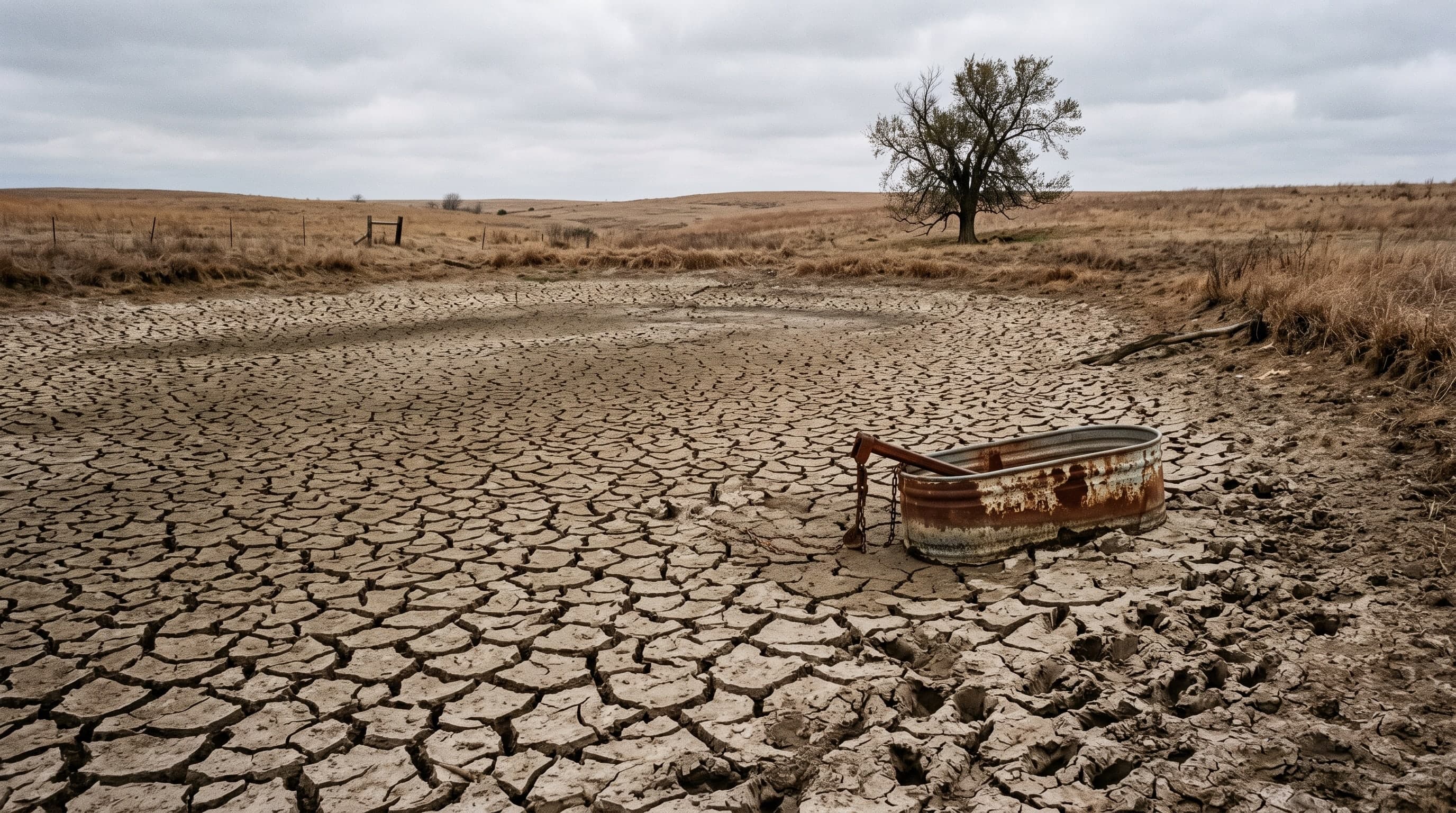
The map moved fast this week. Thursday's release of the U.S. Drought Monitor shows nearly 96 percent of Oklahoma at least abnormally dry, up from about 65 percent one week earlier — one of the fastest single-week expansions on record here, with roughly 60 percent of the state now in moderate drought or worse. Climatologists have a name for this kind of sprint: flash drought, where extreme heat and a shut-off rain faucet pull moisture out of soil and pasture in days rather than months.
The setup was already in place. Western Oklahoma never really escaped the drought that halved this year's wheat crop; as late as the end of July, five counties out west still carried the Monitor's worst rating, exceptional drought. What changed in early August is the middle of the state. Heat parked over Oklahoma, daytime highs ran into triple digits, rain chances collapsed, and dryness that had been a western story marched east into the counties where most Oklahomans live.
The first institutional response is the county burn ban. Oklahoma County commissioners put a 14-day emergency ban in place Friday, and in conditions like these more counties tend to follow within days. Burn bans are one of the few drought tools that run on a clock and a statute rather than a press conference, so it is worth knowing exactly how they work.
Under Oklahoma law, a county's three commissioners enact a ban by resolution only after finding that extreme fire danger exists, and that finding has two parts. First, the county must either be in severe, extreme or exceptional drought as classified on the federal drought maps, or have no more than a half inch of rain in the three-day forecast. Second, it must document either fire activity running above seasonal norms or that more than 20 percent of its wildfires were caused by escaped debris burns. A county ban can run no more than 14 days at a time, though commissioners can renew it while conditions hold.
Violating a county ban is a misdemeanor carrying a fine of up to $500, up to a year in jail, or both, and any state law enforcement officer can enforce it. The governor can also proclaim a burn ban through Oklahoma Forestry Services; that version stays in force until conditions improve rather than expiring on a 14-day clock, and violations carry fines up to $1,000. Agricultural burning can continue in limited circumstances under Forestry Services guidelines — the bans are aimed at trash fires, brush piles, campfires and bonfires, which is where escaped fires disproportionately start.
What to watch from here: the Oklahoma Mesonet keeps the live map of which counties are under bans, and it is the authoritative version, because county resolutions come and go faster than coverage tracks them. The deeper number is next Thursday's Monitor. July finished hot and dry, August has started hotter and drier, and this is the same soil moisture that fall wheat planting and winter wheat pasture will depend on in about six weeks.
Sources: ODAFF: Burn ban FAQ · Oklahoma Mesonet: Burn ban map · Nature World News: Dryness jumps to 96 percent